

Is a mini split cheaper than baseboard heat in Nebraska
Send the form and the search for an installer is over.
Let a pro reach outA mini split costs less to run than baseboard heat almost anywhere in Nebraska, and power here is cheap, so the gap shows up fast in a winter bill. Baseboard heat uses electric resistance, which turns every watt straight into heat. A mini split moves heat instead of making it, so it produces several times more heat per watt than baseboard, even in a Nebraska winter. The catch is cold. Below a certain outdoor temperature, a mini split's output drops and it leans on backup heat strips that run just like baseboard would, so how much you actually save depends on how often your unit runs that cold. Most homes here heat with gas, so the real comparison for you may be mini split against furnace, not against baseboard. Either way, a mini split sized and installed right for your house and your winters will cost less to run than baseboard heat most days of the year.




Why does the baseboard room still cost more to heat?
You already know the mini split room runs cheaper. The question is whether you're feeling it room by room. Walk the house on a cold night. The room with baseboard heat warms up slower and the air feels dry near the unit, while the mini split room reaches temperature and holds it without the baseboard's slow climb. Check your thermostat settings if you have them split by zone. If you're running the baseboard longer to get the same comfort, that's the extra cost showing up in real time, not just on the bill at the end of the month. Left alone, you end up heating with the expensive source more than you need to, especially in a back bedroom or addition where the baseboard is the only option. That's worth fixing before the coldest stretch of winter, not during it.

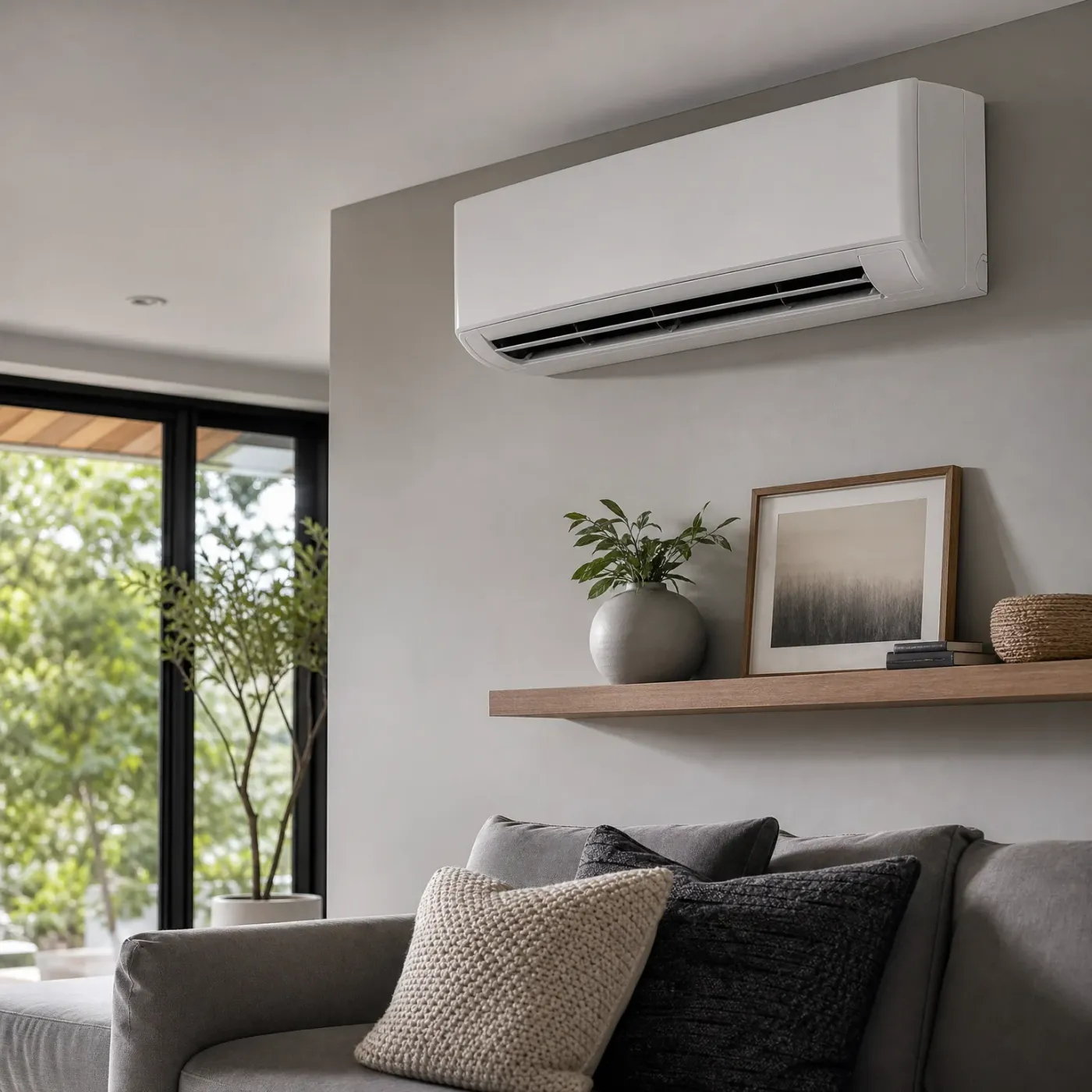
The outdoor unit pulls heat out of cold outside air.
Refrigerant carries that heat inside through the line set.
The indoor head blows warm air straight into the room.
The baseboard, if it runs, heats only through its own metal fins.
Mini Split vs Baseboard Heat
Mini Split
- Pulls heat from outside air instead of generating it, so it moves more heat per watt than baseboard can.
- One outdoor unit can serve several rooms through separate indoor heads, so you're not paying to heat rooms you're not using.
- Works in reverse come summer, so the same install handles the sticky months without a separate AC.
- Costs more upfront to install than adding baseboard, since it needs an outdoor unit, a line set and at least one indoor head.
- Loses some efficiency as the outside temperature drops, so its advantage over baseboard narrows on the coldest nights.
- Needs a spot for the outdoor unit and a path for the line set, which not every room or wall allows.
Baseboard
- Turns every watt into heat directly, with no outdoor unit and nothing to lose efficiency as it gets colder outside.
- Costs less to add to a single room since it's just a line run and a heater, no outdoor unit or line set.
- Heats only the room it's in, through its own metal fins, with no ductwork or indoor head to move air around.
- Runs on electric resistance, the same costly way a space heater does, so the bill climbs faster the longer it runs.
- Does nothing for you in the sticky Nebraska summer, since it only puts out heat and never cools.
- Keeps running the same way no matter how old it gets, since there's no outdoor unit or refrigerant charge to service.




A mini split is rated by HSPF2, a measure of how much heat it moves per watt over a full winter. Baseboard has no such rating, because every baseboard heater converts watts to heat at the same fixed rate.
That rating is the gap. A baseboard heater can't beat its own wattage, but a mini split with a good HSPF2 number moves two or three times that much heat for the same power.


Let someone else find the pro
One installer gets your project, so there's no bidding war over it.
Send it once and finding someone is no longer on you.
It costs nothing to send, and you don't have to hire anyone.
Power costs 12.05 cents per kilowatt-hour statewide
At 12.05 cents a kilowatt-hour, every watt your mini split saves turns into real money, and every watt your baseboard wastes as pure resistance heat costs you the same. The cheaper power here is, the more that gap between moving heat and making it adds up over a winter.
EIA-861 2025 statewide residential average
Where That Leaves You
- A mini split costs less to run than baseboard heat in Nebraska, and cheap power here only widens that gap.
- The savings show up room by room, not just on the bill, since baseboard still heats through fixed-rate resistance.
- A clean, well-maintained mini split keeps pulling heat from outside air efficiently all winter, which is what keeps the cost low.
- A local contractor who services this equipment all season knows which parts tend to fail and what keeps the unit running at its rated efficiency.
- Sending one request puts you in touch with one licensed local installer instead of a string of calls to sort through.
The answer holds up. A mini split costs less to run than baseboard heat in Nebraska, and the cheap power here means that gap in the bill is real money, not a rounding error. Baseboard turns watts into heat at a fixed rate, no better in January than it was the day it was installed. A mini split moves heat instead of making it, and that difference compounds every month it runs. What decides whether you keep that edge is upkeep. A mini split with a clean filter and a clear outdoor coil keeps pulling heat efficiently all winter. Let it sit dirty and it works harder for the same warmth, and the savings you were counting on shrink. That is where having the right person matters more than having any person. A contractor who services this equipment all season in Nebraska, not just installs it once and leaves, knows which parts tend to wear first and what keeps a unit running at the efficiency it was rated for. Send one request and you're matched with one licensed local installer who knows this equipment, not a handful of companies competing for your callback. You already know the number. What's left is making sure the unit in your house actually hits it, winter after winter, instead of drifting toward whatever baseboard already costs you.

Mini Split Installation
One request and it's handed off

- A local installer who puts in mini splits gets your project.
- Get in touch with a local installer about a new mini split.

- One request ends the search for a mini split installer.
- Once you send the form, finding a pro is off your list.

- Skip the round of in-home estimates for a new mini split.
- Describe the project once instead of to every installer.

- Your request goes to one pro, not a list of companies.
- The pro who reaches out is licensed in Nebraska.