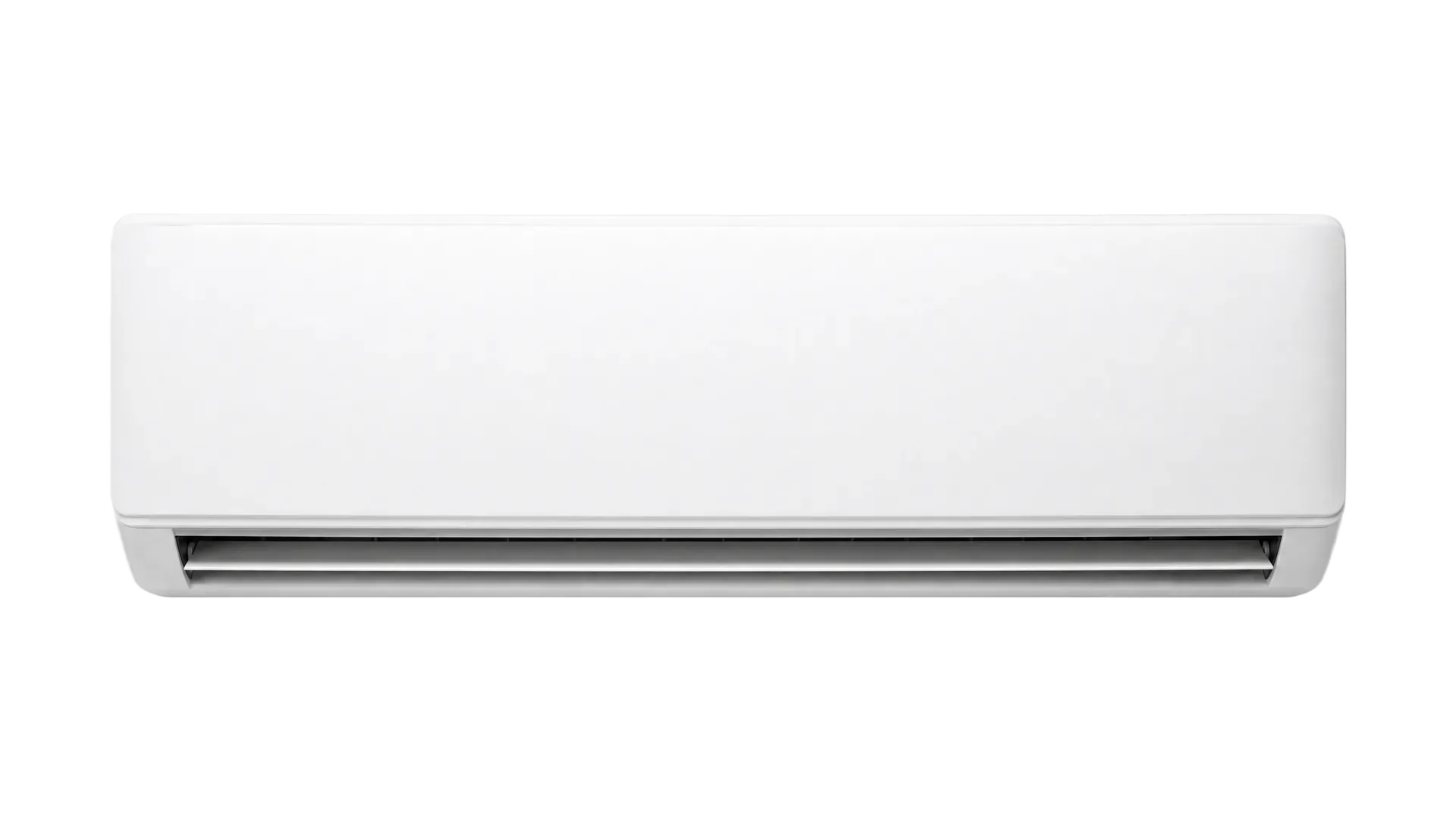
Running clean
A dry wall under the unit and no staining on the ceiling or floor means the drain line is doing its job. The indoor unit stays quiet, the coil stays clear, and nothing drips when it cycles on.
Water dripping from your mini split is almost always a drain problem, not a refrigerant problem. The indoor unit pulls moisture out of the air and that water is supposed to run out through a condensate line to the outside. When that line clogs with algae or dust, or the pan underneath cracks or gets knocked out of level, the water backs up and finds the nearest way out, usually down the wall under the unit or out the front of the housing. In Lincoln's summer humidity, that unit is pulling a lot of moisture all day long, so a slow clog shows up fast as a steady drip. A dirty air filter can cause the same thing by icing the coil, which then melts and overflows the pan. Either way, the water itself won't stop until the line is cleared or the part causing the backup is fixed.


Cooling runs June through September
Cooling runs June through September here, and that's four straight months of your indoor unit pulling moisture out of the air through that same drain line.
Heat runs October through May
Heat runs October through May here, eight months where the drain line sits unused and dry, which is exactly when algae and buildup settle in before cooling starts again.
Power here costs 11.20 cents per kilowatt-hour
Power here runs 11.20 cents per kilowatt-hour, cheap enough that most homes lean on a mini split hard all summer, and a clogged line shows up fast once it's working that much.
NOAA nClimDiv 1991-2020 · EIA-861 2025
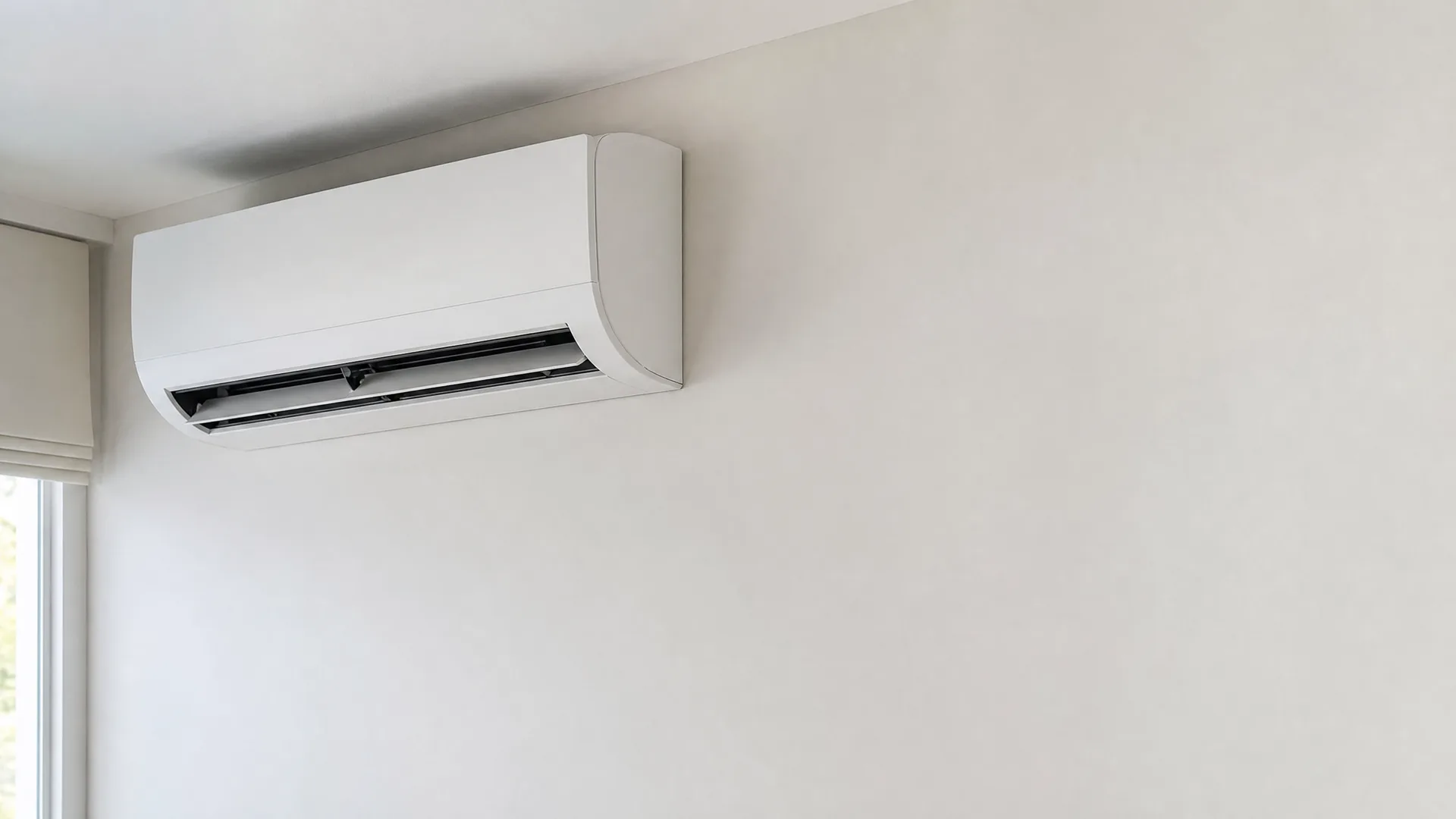
The condensate line runs from the indoor unit down through the wall and outside, and it's narrow, usually about three quarters of an inch across. Algae and mold build up on the inside of that tube the same way they would in any tube that stays wet and dark for months at a time. Once enough builds up, water backs up into the drain pan and spills over the front of the unit instead of leaving the house.
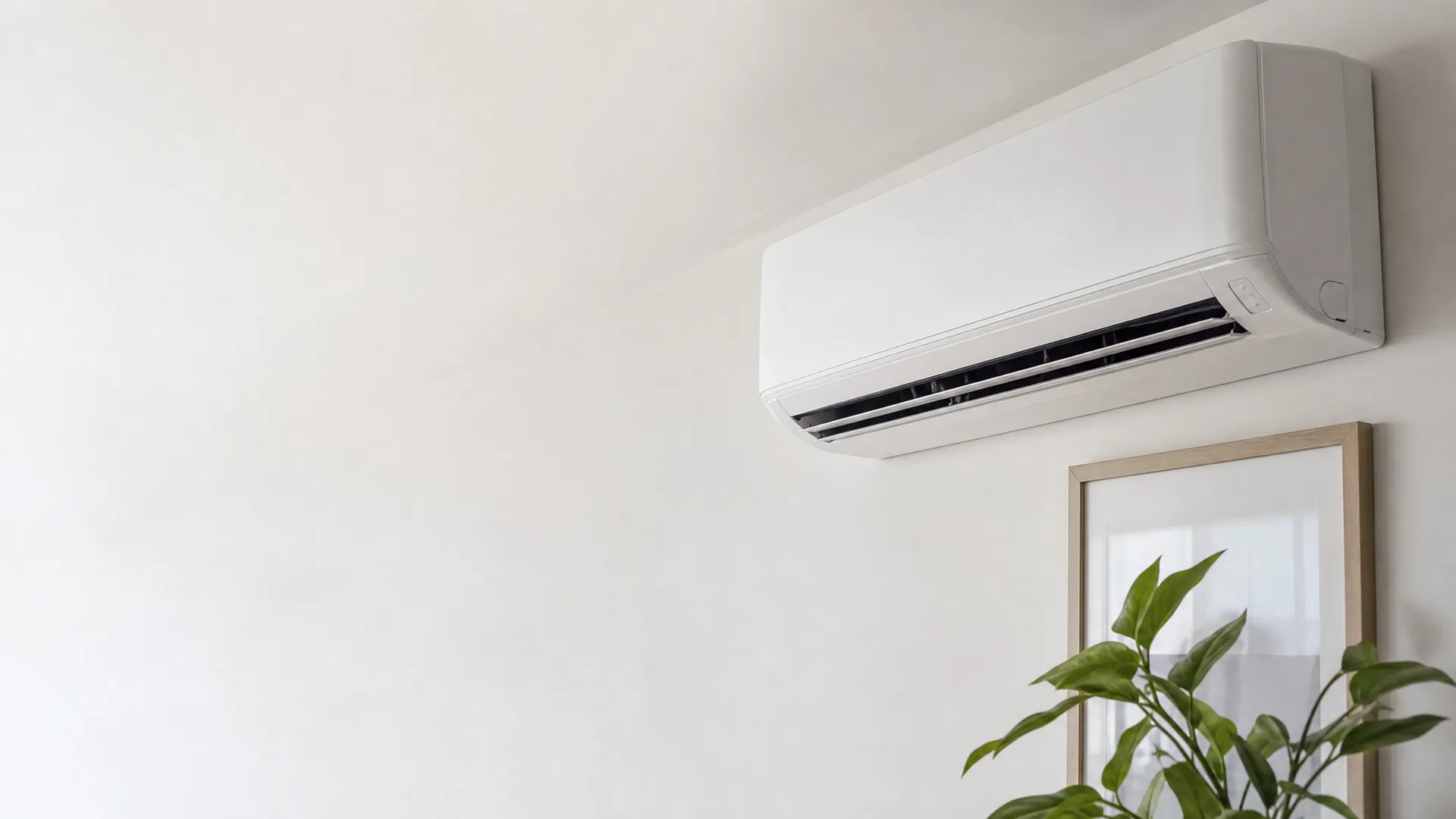
The drain pan under the indoor coil is shallow. It's built to carry water a few inches to the drain line, not to hold it. So when the line clogs, the pan fills within a day or two and water finds the nearest low point, which is usually the front panel or the wall below it. That's why the leak tends to show up fast once it starts, not gradually.
Look under the indoor unit first. A wet spot on the wall below it, a stain spreading across the ceiling if it's mounted up high, or water pooling on the floor or windowsill underneath. Sometimes it's just a drip you catch after the unit's been running a while. Sometimes you'll hear it, a slow tick of water hitting the floor or a tray. If the unit is mounted over drywall, that water doesn't just disappear. Left alone, it soaks in, and drywall that stays wet starts to soften, stain, and eventually grow mold behind the surface where you can't see it until the wall itself needs work.

A dry wall under the unit and no staining on the ceiling or floor means the drain line is doing its job. The indoor unit stays quiet, the coil stays clear, and nothing drips when it cycles on.

Dust on top of the unit is normal. Dark residue around the vents usually means moisture has been sitting and mixing with dust and grime, often a sign the drain line is already backed up and water is finding another way out.

This is what a healthy mini split looks like. The casing is clean, the vane louvers move freely, and no water shows anywhere on the wall below. The drain line is carrying moisture outside as fast as the coil pulls it from the air.

Dust and discoloration on the casing often sit alongside a drain line working harder than it should. Buildup inside the tube slows the water down, and what doesn't drain starts backing up into the unit, looking for another way out.


A mini split that's already dripping onto your wall or floor isn't going to fix itself, and left alone the clog usually gets worse, not better, since algae keeps building on the sides of that drain line until it closes off completely. Someone local who services these units all summer has seen which models clog fastest and where the line tends to back up, so the diagnosis isn't a guess. Send the request and it goes to one licensed contractor near Lincoln, not a handful of companies competing for the job, so you're not stuck fielding calls while water keeps finding its way onto your floor or down the wall. That's one thing off your plate on a day you probably didn't plan around your mini split. The stain on the ceiling or the puddle on the windowsill won't wait for a convenient week, and the longer that line stays clogged, the more that water has to go somewhere.

That dew point in Lancaster County averages 62°F through June, July and August, according to NOAA climate records. Once it's up that high, the air is heavy enough that your mini split's indoor coil is working almost nonstop to pull moisture out of it, and more moisture means more water trying to find its way down that drain line all summer. That's exactly when a half-clogged line stops keeping up and starts backing up instead. If you've noticed the dripping gets worse on the muggiest days rather than the hottest ones, that's why. A line that drained fine in a dry stretch can start overflowing the moment the air turns sticky again.
NASA POWER T2MDEW
Your mini split shut itself off and you noticed it right after you saw water pooling or staining near the indoor unit. You're wondering if the two are connected, or if something else just failed on its own. It feels like the unit is protecting itself from something, and you want to know what that something is before you decide whether this is a quick fix or a bigger problem.
The float switch sits in the drain pan under the indoor coil. When the condensate line is clogged and water backs up into the pan instead of draining outside, the float rises with the water level. Once it reaches a certain point, the switch trips and cuts power to the unit. That's the whole job of the part: stop the system before the pan overflows onto your wall or floor. It means the clog you're dealing with has already gotten bad enough to back water up that far. The unit isn't broken. The drain line behind it is blocked, and until that's cleared, the float switch will keep shutting things off every time water rises in the pan.


Water showing up under your mini split comes down to one thing almost every time: the condensate line that's supposed to carry moisture outside has slowed down or clogged, and the water is finding another way out. It's not the refrigerant, and it's not usually anything wrong with the unit itself. The coil is still pulling moisture from the air the way it's built to. The problem is downstream, in a narrow line that algae has been building up in, maybe for a while before you noticed anything on the wall or floor. If the float switch has already shut the unit off, that's not a separate failure. It's the switch catching the overflow before it spreads, which is exactly what it's there for. A tech can usually clear a clogged line with a wet vacuum or nitrogen and have the unit draining properly again. What flushing out won't fix is a cracked drain pan or a float switch that's stopped working, since those are physical parts that have to be replaced, not cleaned. Either way, the fix depends on which one you're dealing with, and that's something a local tech can tell within a few minutes of looking. Lincoln doesn't give this line much of a break. Summer runs the coil hard for four straight months, and heat covers most of the rest of the year, so the drain line and the float switch are doing their job nearly twelve months out of twelve. Left alone, the clog doesn't stay the same size. It keeps closing in until the line blocks off completely.




Hand off the mini split problem
The pro who gets in touch is licensed in Nebraska and works in Lancaster County.
