Normal defrost cycle
The outdoor unit pauses, frost melts off the coil, and the indoor head goes back to blowing warm air. A cycle like this runs a few minutes at a time on a cold Nebraska morning, then the system goes right back to heating.
 Start one form
Fill out one short form instead of calling around.
Your mini split switches to defrost on its own when it needs to. You'll see the outdoor unit stop, maybe steam rise off the coil, and the indoor head might blow cool or stop blowing for a few minutes. That's the system melting ice off the outdoor coil so it can keep pulling heat from the outside air. It's normal in cold weather, including the kind Nebraska gets from December through February.
What isn't normal is defrost that runs too long, runs too often, or never seems to end. That points to something wrong: a low refrigerant charge, a failing sensor, a fan that isn't moving air the way it should, or a reversing valve stuck where it shouldn't be. A mini split stuck in defrost, or one that keeps dropping into it when it's only mildly cold out, won't keep your house warm, and most homes here are counting on gas for that anyway, so a mini split acting up on a cold snap is one more thing pulling at a system that should just be helping out.
Figuring out which of those it is from a thermostat and a hunch isn't realistic. It takes someone who's looked at the inside of enough outdoor units in Nebraska winters to know what usually gives out first, and what to check before pulling the cover off anything.
That's the part this page gets you past. Instead of searching around for someone who services mini splits, calling a few places to see who even picks up, and walking through the same symptoms over and over with each one, you answer a few questions once and hear from a contractor who works on this equipment locally and already has an idea of what's likely going on. One contractor, not a string of callbacks from companies competing for the job. Licensed, local, and used to Nebraska winters doing exactly this to exactly this kind of system.
From there, it's a straightforward look at your unit instead of a guessing game over the phone.
A Nebraska mini split that keeps dropping into defrost through a cold stretch can feel like something's wrong with it, especially when the outdoor unit sits idle for a few minutes at a time and the indoor head stops blowing warm air. You want to know if this is normal or if it's a sign the unit needs a repair call before the next hard freeze.
When nights sit near or below freezing, the outdoor coil picks up frost faster, so the unit runs defrost more often just to keep pulling heat from the air outside. That's expected once temperatures drop through a Nebraska winter. What's not expected is defrost running every few minutes, lasting longer than it should, or the outdoor unit coming out of it still caked in ice. That points to low refrigerant, a failing sensor, or a reversing valve that isn't switching back properly, and those need a licensed technician to diagnose. If you heat your home with gas and use the mini split mainly for shoulder-season heat or cooling, frequent defrost on a cold snap is less of a concern than it would be if the mini split is your only source of heat.

The outdoor unit pauses, frost melts off the coil, and the indoor head goes back to blowing warm air. A cycle like this runs a few minutes at a time on a cold Nebraska morning, then the system goes right back to heating.

Dust and grime built up on the coil and vents hold heat in instead of letting it release. Defrost cycles run longer and more often, and the indoor head may blow cool air for stretches that feel too long to be normal.
You might notice the outdoor unit sitting quiet longer than it used to, or the indoor head blowing room-temperature air more often on a cold night. Maybe you've gone out and seen ice built up on the coil or along the bottom of the cabinet instead of just light frost. A fan that sounds like it's grinding or rattling when it does run is worth paying attention to too. On its own, one long defrost cycle during a hard freeze isn't unusual. But a unit that can't clear the ice, or keeps cycling without warming the house back up, is losing ground against the cold faster than it can recover, and gas backup or not, you'll feel that as a colder room and a harder-working system.




Only one pro gets your request, so you hear from one company.
Explain the job once and skip repeating it on every call.
There's no charge for the request.
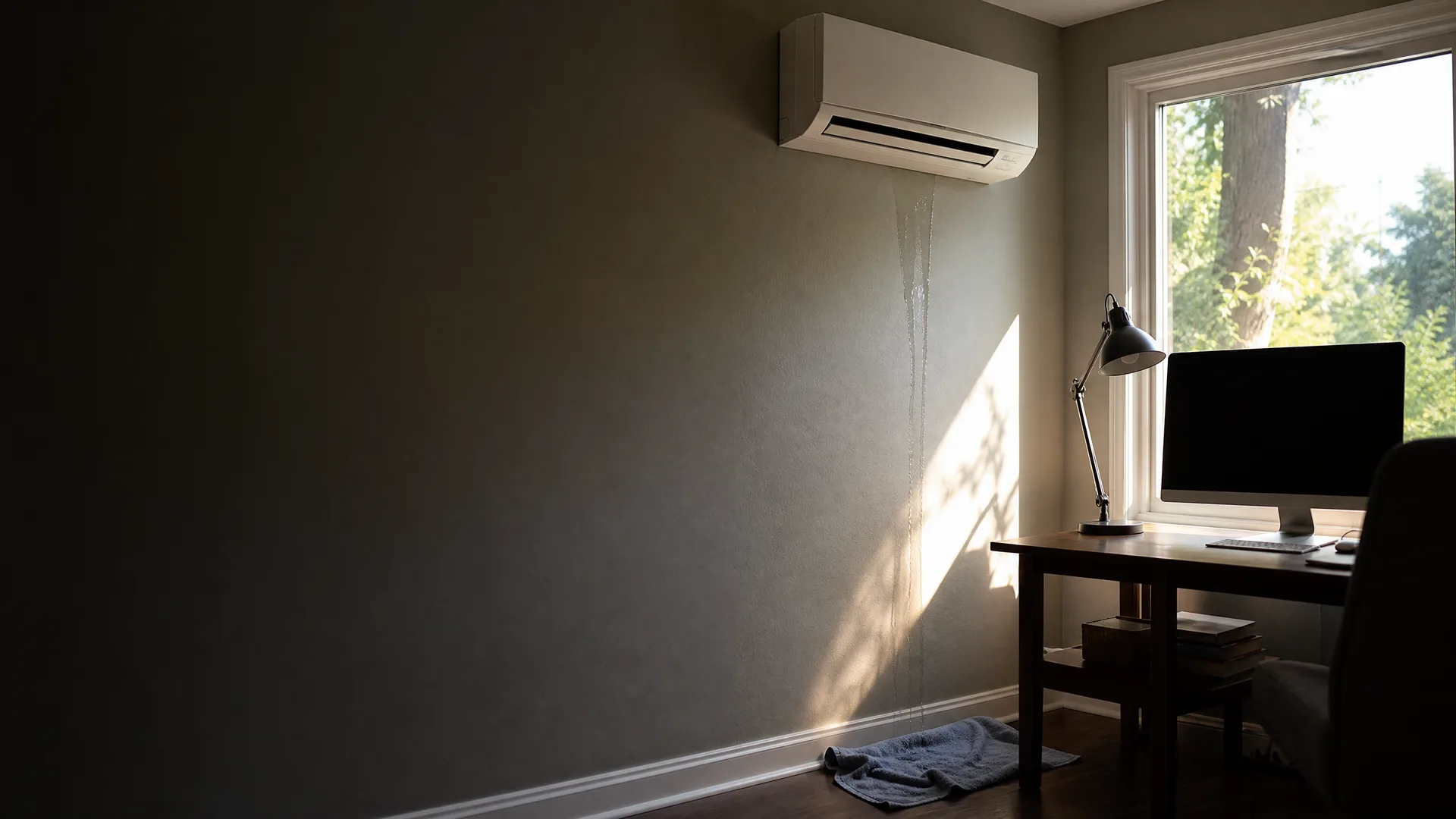
You're at the desk working through a July afternoon, and you notice the wall under the indoor unit looks dark. A thin streak of water has run down from the mounting plate, past the outlet, onto the baseboard. You go over and touch it. Wet. There's already a small puddle on the floor, and you grab a towel from the bathroom to lay down before it spreads to the carpet. The unit above is still running, air moving out of it like normal. You stand there a second, looking up at the case, trying to figure out where the water is actually coming from.


A sensor on the outdoor coil reads the coil temperature as it drops.
The control board reads that drop along with how long the unit has run.
Once both trip its threshold, the board switches the reversing valve.
Hot refrigerant now flows through the outdoor coil instead of the indoor one.
At 12.05 cents a kilowatt-hour, running defrost cycles on a cold night isn't what drives your bill up. A mini split stuck defrosting too often, instead of heating, is what costs you, since it's pulling power without warming the room.
EIA-861 2025 statewide residential average

A few minutes of defrost on a cold Nebraska night means the system is doing what it's built to do. An outdoor unit that stays frozen past that, or an indoor head blowing cold or nothing on a January evening, means something in that cycle isn't finishing the way it should. You don't need to know whether that's the sensor, the reversing valve, or a low charge before you call. You just need to know it's not normal anymore.
Finding out which one it is means someone who works on these systems every winter, not a search through listings or a round of calls to companies that all want to send someone out and quote you different numbers for the same problem. One licensed contractor local to you looks at the unit, tells you what's actually failing, and fixes that part. No repeating the story three times to three different voices. No comparing bids for a problem you can't diagnose yourself.

Your request stays with one local pro.