

Running the way it should
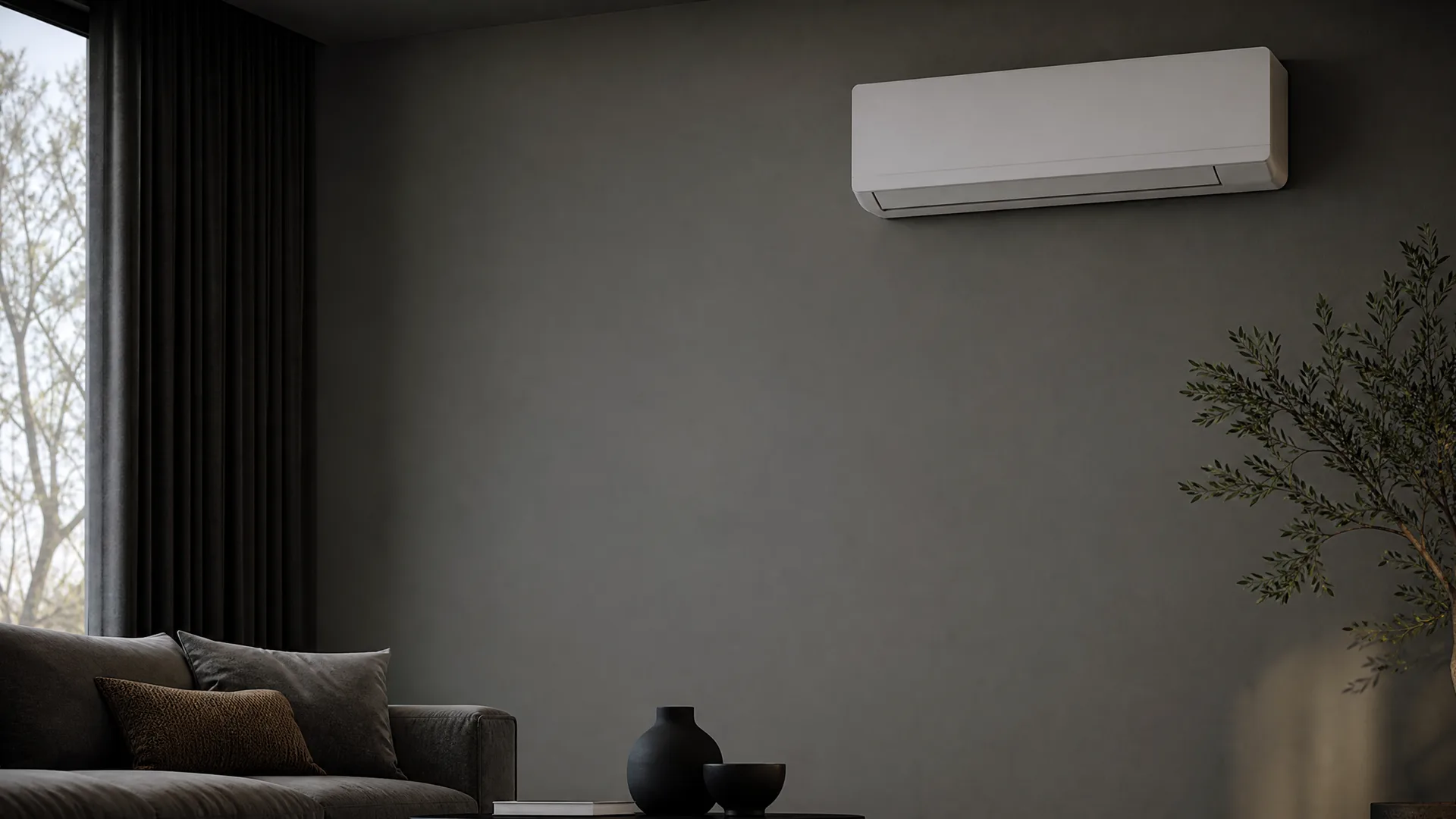
This is what a correctly sized mini split looks like on the wall, quiet and clean, holding the room steady. No streaking under the vents, no short cycling you can hear from the next room. It just keeps up.
The right size comes from a load calculation, not a chart based on square footage alone. A contractor measures your home's insulation, window area, and layout to figure out how many BTUs it actually needs to heat and cool. In Nebraska, that calculation has to account for both sides of the year, since most mini splits here work as air conditioners through the sticky summer months and some run as the main or backup heat alongside a gas furnace in winter. A unit sized too large will cycle on and off fast, leaving rooms clammy in summer because it never runs long enough to pull the moisture out of the air. One sized too small will run constantly and still fall short on the coldest days. Getting the number right means the system can hold a steady temperature in every room it serves, without short cycling or straining. That number depends on your specific house, not the one next door.
At 12.05 cents per kilowatt-hour, running a correctly sized mini split here doesn't strain the budget the way it might elsewhere. But an oversized unit still cycles on and off more than it should, and that adds up on the bill even with cheap power. Getting the BTU count right is what keeps your summer cooling costs low.
EIA-861 2025 statewide residential average
A mini split doesn't work like a window unit, where the compressor is either on or off. It modulates, speeding up and slowing down to match the load at that moment. Size it too big for your home and it spends most of its time idling near the bottom of that range, which is often the least efficient place for it to run. You lose the benefit of the variable-speed compressor you paid for.
Summer here is sticky, and that changes what "right-sized" means. A unit matched to your home's actual heat gain runs longer cycles, and longer cycles pull more humidity out of the air along the way. An oversized unit cools the room fast and shuts off before it's done much dehumidifying, so the air feels cool but still damp.
Winter sizing has its own wrinkle if you're pairing the mini split with your gas furnace. The indoor head needs to cover its share of the heat loss on the coldest night, not an average night, and manufacturers rate capacity at a specific outdoor temperature. A unit that looks fine on a spec sheet can fall short once it's actually below freezing outside.
The line set matters too. It has to be sized for the system's capacity, not just cut to reach from the outdoor unit to the indoor head. Get that wrong and the whole calculation upstream of it doesn't hold.






A mini split that's the wrong size shows up in the rooms it serves. One room stays warm while another never cools past lukewarm, especially upstairs where heat collects in July and August. You might notice the unit short cycling, kicking on, running a few minutes, then shutting off again and again rather than settling into a steady hum. Humidity lingers indoors even after the air feels cool, leaving surfaces slightly damp. Over months, that extra moisture and the hard cycling put more wear on the compressor than steady running would. If your gas furnace handles winter and the mini split only has to manage summer and shoulder months, a bad size still leaves rooms uneven whenever it's doing the work.



Skip collecting and comparing quotes for the new mini split.
A local installer who puts in mini splits gets your project.
It costs nothing to send, and you don't have to hire anyone.


A contractor measures each room's length, width, and ceiling height.
They check window area, glass type, and which way each room faces.
They note insulation levels in the attic and walls.
These numbers feed a room-by-room BTU load calculation.
Most homes in Nebraska heat with a gas furnace, so a single mini split is usually going in as a supplement, not a replacement for the whole house. But if you're building new or going all-electric, it's a fair question whether one unit can cover every room, especially with how cold winters get and how sticky those summer months are.
A single mini split has one outdoor compressor and typically one indoor head, and that head only conditions the room it's mounted in. Air doesn't travel through ducts to other rooms. If your house is a small, open layout, one head placed well might cover it. Most homes need a multi-zone system, where one outdoor unit runs two to four indoor heads, one per room or zone. A contractor sizes each zone separately based on that room's own heat loss and heat gain, then adds them up to size the outdoor unit. Skipping that step is how you end up with a bedroom that's always too warm in January.

A 61°F average summer dew point sounds mild next to the heat, but it's the moisture your mini split has to pull out of the air before a room feels dry instead of clammy. A unit sized right for your home handles that load along with the temperature drop. One sized too big cools the air fast and shuts off before it's wrung out the humidity, so the room hits its set temperature and still feels damp. That's the stickiness you'd notice on your skin or the dampness in the air even with the thermostat satisfied. Source: NOAA climate normals.
NASA POWER T2MDEW county cells weighted by homes

This is what a correctly sized mini split looks like on the wall, quiet and clean, holding the room steady. No streaking under the vents, no short cycling you can hear from the next room. It just keeps up.

Dirt and mold along the vents like this usually trace back to a unit that's been cycling hard for years, not just a missed cleaning. When the size is wrong, it runs harder and more often than it should, and this is what shows up over time.

A load calculation is what gets you there, not a guess based on square footage. That's the whole answer: the size your mini split needs to be is the size that matches your rooms, your windows, your insulation, and Nebraska's summers and winters, figured room by room by someone who's measured it.
Getting that match right is a different job than most homeowners want to take on alone, calling around for quotes, explaining the same layout to three different contractors, trying to compare numbers that aren't measuring the same thing. When you're matched with a contractor who handles installs like yours, that part is done, and they'll reach out to go over what your home actually needs.

Fill out one short form instead of calling around.