Why your mini split has ice on it in a Nebraska winter

Step 1 of 3: Equipment

That ice is frost from normal defrost cycling, and in a Nebraska winter it can get ahead of the system. Your mini split pulls heat out of outside air even when that air is well below freezing, and moisture in the air turns to frost on the outdoor coil as it does. The unit is built to notice this and run a defrost cycle to melt it off. When temperatures drop hard, which they do here through December and January, that cycle has to run more often, and if it can't keep up, frost builds into a solid sheet of ice. A thin coat that clears on its own during defrost is normal. Ice that stays, grows thicker, or covers the whole outdoor unit means the defrost cycle isn't doing its job. That can come from a stuck reversing valve, a failed sensor, a fan that's not moving enough air, or low refrigerant charge. Left alone, it strains the compressor and the unit loses heating capacity right when you need it most.

A dim room with a wall-mounted mini-split air conditioner above a water stain running down the gray wall to a towel on the wood floor, with a black shelving unit, a desk with a lamp and potted plant by a window, and an office chair at right.

You're working from the home office in July, the mini split humming on the wall above your desk. You look up from the laptop and catch it: a dark streak running down the drywall under the indoor unit, already a foot long. A towel is balled up on the floor where it's been catching the drip for who knows how long. Outside it's sticky and ninety-some degrees, the kind of afternoon this unit runs flat out. You get up and press a hand to the wall. Still wet. The drain line behind that unit has to be backed up, and it's been feeding this wall a lot longer than the towel suggests.

Power costs 12.05 cents per kilowatt-hour statewide

At 12.05 cents per kilowatt-hour, running the mini split through a frozen coil costs you more for less heat. Ice blocks airflow, so the system draws power trying to catch up instead of warming the room. A quick repair stops that waste before another cold month runs up the bill.

EIA-861 2025 statewide residential average

Frost that clears on its own

A thin layer of frost on the outdoor coil during a defrost cycle is normal. The system reverses itself for a few minutes, melts it off, and goes back to heating. You might see a little steam coming off the unit while that happens. If the frost comes and goes and the mini split keeps putting out warm air, it's doing what it's supposed to do. No call needed yet. Just keep an eye on it over the next cold snap and see if the pattern holds or starts getting worse.


Ice that keeps building back

If the coil goes from frosted to coated in solid ice, and it comes back within a day of melting it off yourself, something underneath isn't working right. A low refrigerant charge, a failing defrost sensor, or a fan that's slowed down can all keep the system from clearing itself the way it should. The unit will keep running and drawing power without doing much heating. That's the kind of thing that's worth having a local contractor look at before it turns into a bigger repair.

A smiling man in a gray long-sleeved shirt stands in a kitchen looking to the side, with open shelves of dishes, a white mug on the counter, a potted plant, and a view through a doorway into a living room.
A smiling bearded man in a green sweater sits at a white marble kitchen island with a mug, potted plant and bowl of fruit, in a bright white interior with open shelving and an arched doorway.
A smiling man with dark curly hair and a beard, wearing a dark green knit sweater, stands at a white marble kitchen counter with a dark blue mug, with open shelving, pendant lights and a houseplant behind him.
A smiling man in a green ribbed sweater stands behind a wooden table holding a ceramic mug of coffee in a kitchen with white subway tile, shelves of potted plants, and a bowl of fruit.
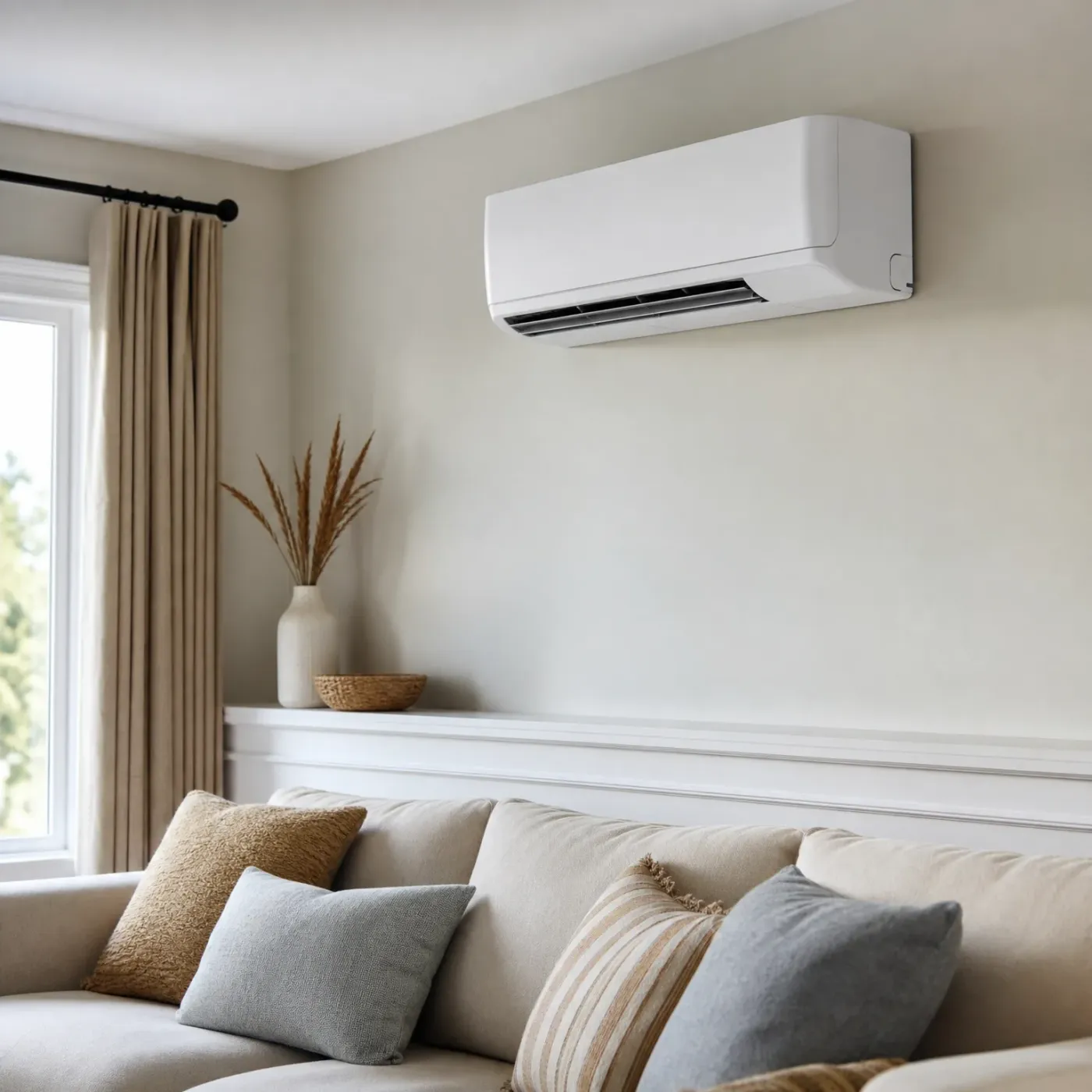
A white wall-mounted mini-split air conditioner on a pale wall above a beige sofa with assorted cushions, beside a window with long curtains and a shelf holding a vase of dried grasses and a woven bowl.

Hand off the mini split problem

The pro who reaches out is licensed in Nebraska.

Send it once and finding someone is no longer on you.

Find a licensed pro

Asking costs nothing, and the choice to hire stays yours.

How does the defrost cycle actually work on a mini split?

You already know some frost is normal, but that doesn't tell you what the unit is doing when it defrosts, or why it sometimes can't keep up on a cold Nebraska night. You want the actual sequence, not just the reassurance that it's working as designed.

It reverses the refrigerant flow for a few minutes to melt the coil, then switches back

A sensor on the outdoor coil tracks its temperature. When frost builds up enough to matter, the system switches into reverse, the same way the unit would run in air conditioning mode, and sends hot refrigerant through the outdoor coil instead of the indoor one. That heat melts the frost off in a few minutes. You'll sometimes see steam rising off the outdoor unit while this happens. The indoor fan usually pauses or slows so it isn't blowing cold air into the room during that short reversal. Once the coil senses it's clear, the system flips back to heating. On a single-digit night, outside air holds so little moisture that frost can reform faster than the unit cycles it off.

A white wall-mounted mini-split air conditioner on a beige interior wall, with a curtained window on the left and wood flooring with a light rug below.

Running the way it should

This is a mini split moving warm air into the room, coil clear, fan steady. It cycles into defrost now and then on a cold night, clears itself in a few minutes, and goes back to heating. Nothing on the outside unit builds up and stays.

A white wall-mounted mini-split air conditioner indoor unit installed near the ceiling on a plain light-colored wall, with its horizontal outlet vent and louvers visible.

Falling behind the frost

Dust on the casing and vents like this usually means the filter and coil haven't been cleaned in a while. A dirty coil can't shed heat the way it should, so the defrost cycle runs longer and more often, and the ice gets ahead of it instead of melting off.

Why is ice still there after the unit defrosts?

You step outside and the outdoor unit is crusted over, not just frosted. The coil behind the fan blades is solid white, maybe gray with ice thick enough to hold its shape when you knock on it. The fan might still be spinning but moving less air than it should, or it's stalled against the ice and making a strain noise it didn't make before. Inside, the room takes longer to warm up, or the air coming out feels cooler than it used to. Left alone through a hard freeze, ice that never clears can bend fan blades or crack the coil fins, turning a frost problem into a part you have to replace instead of one you just had looked at.

A smiling man with dark curly hair in a navy t-shirt sits on a gray couch indoors, with a large-leafed plant and a window in the background.
A bearded man in a plaid flannel shirt stands in a kitchen looking out a window toward snow-covered shrubs, with a steaming mug on the windowsill and potted plants on a shelf behind him.

Ice That Stays Means Call Someone

  • Frost that clears itself in a few minutes during a defrost cycle is normal; ice that stays and thickens is not.
  • A mini split that can't shed ice on its own is telling you something inside it needs attention, not that the Nebraska cold is simply too much.
  • Running the unit through a frozen coil wastes power and won't melt the ice faster.
  • A local contractor who services mini splits through Nebraska winters has likely already seen whatever's keeping your unit from defrosting right.
  • Sending one repair request means one licensed technician looking at your system, not a string of calls from companies competing for the job.
  • Once you know the difference between normal frost and a stuck defrost cycle, the next step is getting the right person to look at the coil itself.

A little frost on the outdoor unit on a cold Nebraska night doesn't mean anything is wrong. The system clears it on its own, drops back into heating, and keeps going. Ice that stays, builds up over the coil, or hangs on after the unit has had time to defrost is a different thing. Something inside, a sensor, a valve, a board telling the unit when to switch modes, isn't doing its job. The cold outside isn't the problem. A mini split that's working right handles a Nebraska winter without turning into a block of ice.

Running the unit anyway doesn't fix it. It draws more power trying to push heat through a coil that can't move air, and the ice doesn't melt any faster for it. What it needs is someone to look at the actual part that's failing, which means getting the unit in front of a contractor who knows what that usually is.

Someone local who works on mini splits through winters like this one has likely already run into whatever's keeping yours from clearing itself. That's the kind of repeat problem a technician learns to spot fast, because it shows up every cold season in systems just like yours. Send the request once and it goes to one licensed contractor, not a handful of companies bidding for the work. You get one technician looking at your coil, not a phone that won't stop ringing. That's the whole point of knowing the difference between normal frost and a system that's stuck: once you can tell them apart, getting the right person on it is the only step left.

A dark wood cabinet with a paneled door and a ceramic pot of green foliage on top stands in a beige-walled room with white baseboard, a window at left, hardwood floor, and a patterned area rug.
A dark wood glass-front cabinet holding folded towels, woven baskets and a ceramic vase stands in a bathroom corner beside a window, with a potted fern and stacked towels on top and a freestanding tub partly visible at left.
A woven basket holding a green cushion and a cream fringed knit throw sits on a wood floor in a room corner beside a window and a dark wooden cabinet.
Corner of a room with a dark wood cabinet topped by a round vase, a linen curtain at a window, white baseboard, oak plank flooring with sunlight patches, and a woven jute rug in the foreground.
A dark wood sideboard against a pale wall holds a shallow stone bowl and a round ceramic vase with leafy branches, with sunlight from a curtained window falling across the wall, wood floor and woven rug.

One request and it's handed off

Only one pro gets your request, so you hear from one company.

Find a local pro

No fee to send it, and nothing to sign.