

Running clean
A mini split that drains properly has nowhere for water to collect. Condensation forms on the coil and runs out through the drain line, and the unit cycles through defrost without ever building up ice on the coil or the cabinet.
A mini split that drips water in winter is almost always icing over. In cold weather the outdoor unit pulls heat from the outside air, and the coil on that unit runs colder than the air around it. Once temperatures drop into the 20s and below, which happens plenty through a Nebraska winter, frost builds up on that coil. The system runs a defrost cycle to melt it off, and that melted frost has to go somewhere. If the drain line or drain pan is cracked, clogged, or wasn't sloped right, the water backs up and finds its way inside instead of draining outside. Sometimes it's simpler than that: a condensate pan with a hairline crack, or a drain hose that froze shut after sitting in subfreezing air. Either way, the water on your floor or wall is a symptom, not the real problem. The leak won't stop until whatever is blocking or breaking the drain path gets fixed.

A mini split that drains properly has nowhere for water to collect. Condensation forms on the coil and runs out through the drain line, and the unit cycles through defrost without ever building up ice on the coil or the cabinet.

Dust and grime on the casing and a dirty filter slow the airflow the unit needs to defrost itself. Ice builds on the coil, melts when the unit cycles off, and runs out wherever it finds a gap instead of the drain line.

Every mini split built for cold weather runs a defrost cycle. When the outdoor coil gets too cold, the unit reverses briefly, warms the coil, and melts off any frost before going back to heating. That meltwater is supposed to run out through the drain line and onto the ground. In a properly working system this happens every so often all winter without you ever seeing it, let alone finding water on the floor.

If your outdoor unit is turning off and on more often than it used to, that can mean defrost is kicking in too soon or too often. A dirty outdoor coil, a low refrigerant charge, or a fan that isn't moving enough air all make the coil run colder than it should, which trips defrost early. More defrost cycles means more meltwater, and more chances for that water to end up somewhere other than outside.
A puddle under the outdoor unit that keeps coming back no matter how many times you mop it up. Maybe a line of ice creeping down the wall below the unit, or ice built up on the cabinet itself. Inside, you might hear the indoor unit drip, or find a wet spot on the wall or floor beneath it. If the drain line has frozen solid, water backs up and the indoor unit can overflow its pan, which means it's running onto your floor or into the wall it's mounted on. Left alone through a Nebraska winter, that water finds wood, drywall, and insulation, and freezing and thawing cycles make the damage worse the longer it sits.




Your request stays with one local pro.
You only hire the pro if you want to.
A little water at the base of the outdoor unit during a mild stretch, or right after a defrost cycle, usually clears up on its own. If the drain line is just slow and the ice melts off by afternoon when temperatures climb into the 30s, there's nothing building up behind it. Check it again in a day. If the puddle doesn't come back, or it only shows up after the coldest nights, that's the unit doing what it's supposed to do. You don't need to shut anything off or call someone for this. Keep an eye on it through the rest of the winter.
Water that keeps coming back no matter the temperature, or ice building up on the cabinet instead of melting off, means something past the drain is working wrong. A stuck defrost cycle or a cracked pan won't fix itself, and running the unit through more cold nights only adds to the ice. If you're seeing water inside near the indoor unit, or the outdoor fan is frozen solid, that's past the point of checking tomorrow. A local contractor who works on mini splits through a Nebraska winter will know which part is behind it.


Keep an eye on it through this cold snap, and check the drain line and the base of the unit once things warm back into the 30s or 40s.
Call now if ice is already climbing the wall, if the indoor unit is dripping, or if the cold stretch isn't breaking for a week or more. That ice only builds from here.
At 12.05 cents a kilowatt-hour, running your mini split's heat strip or backup resistance heat through a hard freeze costs less here than in most states. That makes it tempting to just crank the heat and ignore the icing instead of getting the drain line looked at.
EIA-861 2025 statewide residential average
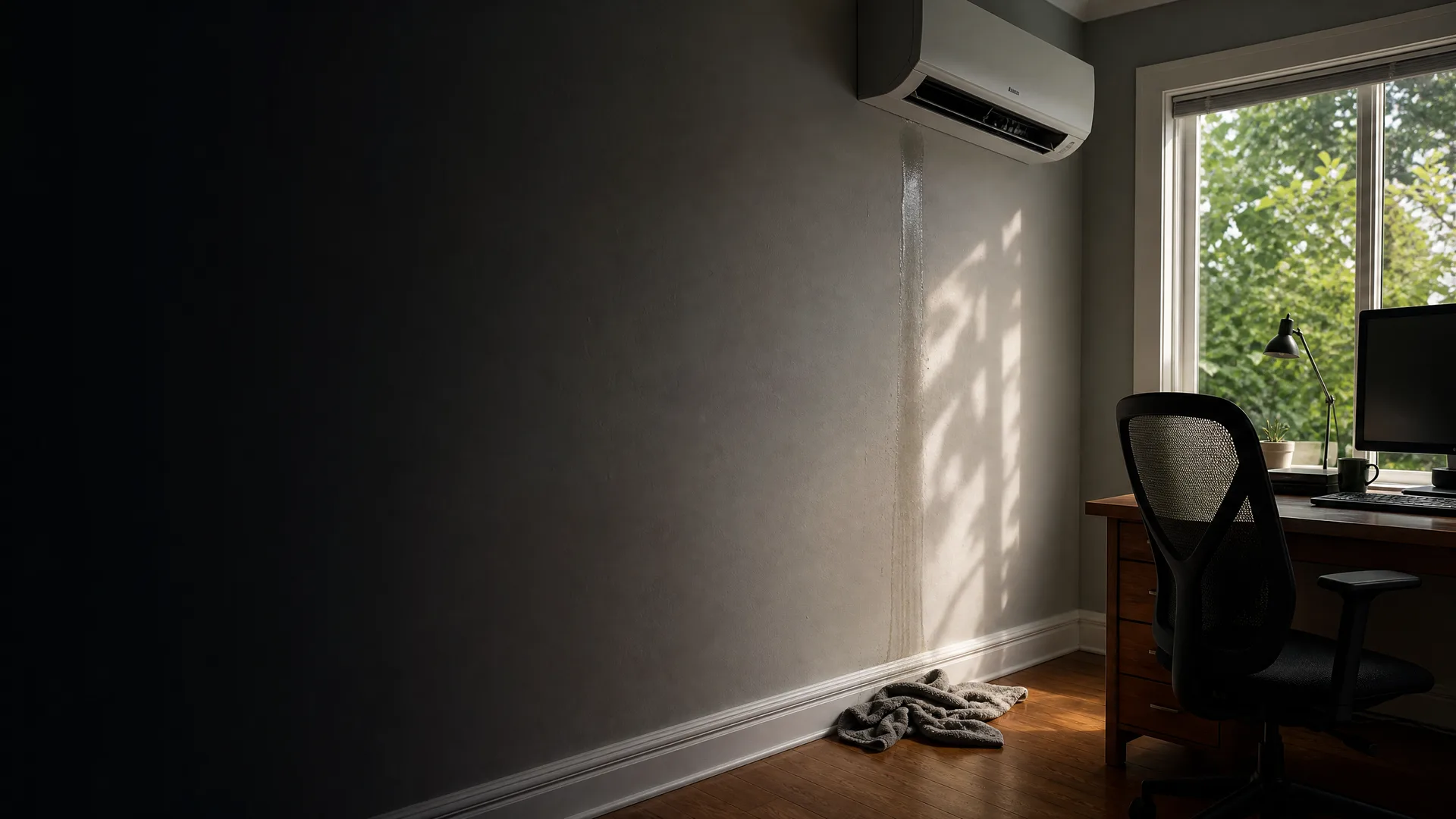
You're at the desk in the home office that afternoon, and you notice the wall under the mini split has a wet streak running down it again. You already put a towel at the base, and it's soaked through. Outside it's one of those January days that never climbs out of the 20s, sun out but no real warmth in it. The indoor unit looks fine, no ice, just that steady drip finding the same path down the drywall. You press a finger to the wall below it. Cold and damp. You pull the towel up, wring it in the bathroom sink, and set it back down before you go back to work.

A mini split that leaks in a Nebraska winter is icing over somewhere between the outdoor coil and the drain line, and the drip you're mopping up is just where that ice ends up melting. The fix depends on where the blockage actually is, and that's not always something you can see from the base of the unit.
A contractor who works on mini splits through a Nebraska winter has likely seen this same leak on a dozen other units this season, on nights just as cold as yours. Getting matched with one means someone local looks at your specific unit, your drain line, your defrost cycle, and tells you what's actually frozen and why. You'll hear from that one contractor directly, not a handful of companies competing for the job.


Your request goes to one pro, not a list of companies.
Asking costs nothing, and the choice to hire stays yours.
